









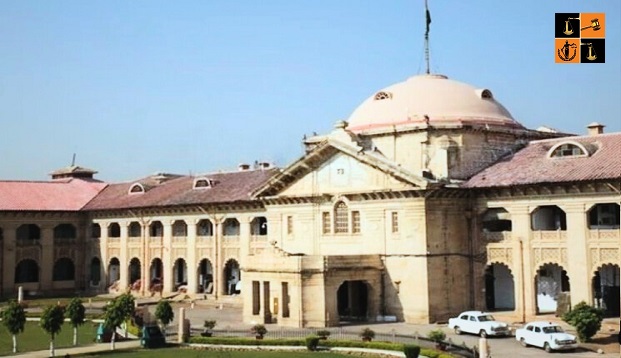
The Allahabad High Court has firmly shut the door on a Kanpur resident who had been appearing in trial courts on behalf of litigants armed with nothing more than a Power of Attorney and a conviction that historical legal terminology gave him the right to do so. Justice Vinod Diwakar dismissed the petition of Vishram Singh, ruling that only enrolled advocates, not self-styled pleaders or mukhtiyars, hold the legal authority to represent others in court as a matter of right, and that the Advocates Act, 1961 leaves no room for ambiguity on this point.
Singh had built his courtroom presence on an argument rooted in pre-independence legal vocabulary: that terms like "pleader," "mukhtar," and "attorney", which still appear in statutes such as Order III Rule 4 of the CPC and Articles 227(3) and 233(2) of the Constitution, preserved a class of non-advocate representatives entitled to practice law with a written power of attorney. His challenge stemmed from a 2019 rejection by an Additional District & Sessions Judge in Kanpur, who refused to appoint him as an advocate for an accused despite Singh's claimed history of regular courtroom appearances.
Singh escalated to the High Court, seeking both the right to practice and the striking down of Chapter IV of the Advocates Act as unconstitutional. The High Court's counsel countered that the 1961 Act conclusively abolished multiple practitioner classes and consolidated the legal profession into a single recognised category, the enrolled advocate, under Sections 29 and 33.
Justice Diwakar traced the evolution of India's legal profession from its pre-1961 plurality, when vakils, pleaders, and mukhtars coexisted, to the unified framework established by the Advocates Act, concluding that the old terminology scattered across statutes and the Constitution must now be read in harmony with the Act's objectives, not against them. The Court was pointed in its criticism of Singh's continued practice, observing that "half-baked knowledge of law is akin to a self-inflicted injury, not only to himself but also to the litigants whom he represents, and it ultimately results in a casualty of justice."
While the Court acknowledged that a non-advocate may, with the court's express sanction, assist in a matter for a limited purpose, it stressed this is entirely at the court's discretion, never a right. The petition was dismissed, and Singh was told he cannot appear as a pleader or attorney for paying litigants without first complying with the enrolment requirements under Chapter III of the Advocates Act.
Picture Source :


















